5. White lie. A harmless or trivial lie, like, “The dog ate my homework,” or, “No, I didn’t eat all of the cookies.”
4. Bald-faced lie. A lie that is told obvious, shameless, and without any attempt to conceal the deception. For example, “No, officer – this is not my dime bag of weed,” while holding said dime bag of weed.
3. Big fat lie. Generally reserved for couples. “No, I didn’t go out with the guys last night: I was at a PTA meeting.”
2. Lying to yourself. There’s too much to unpack here, but I’m pretty sure you can come up with a couple.
1. Government lies. Next level professional lying that can do more damage than all of the other lies combined.
Depending upon the context, the politicians that perpetrate these lies will either look dead serious or smile for the news camera as they tell them. Also, many politicians started out as lawyers, so there’s that.
The list of government lies is far too long for this post, so I’ll highlight a few recent ones:
Donald Trump – Blaming Ukraine for starting the war on Ukraine. Source, CNN.
Joseph Robinette Biden II – On promising not to pardon his son, Hunter. Source, BBC.
Barack Obama – Falsely Claiming that Obamacare Was “Absolutely Not A Tax Increase.” Source, ABC News.
Before talking to the press, maybe the politicians need to be hooked up to a modified polygraph machine that shocks them when they tell a lie? Nah, that’s a terrible, stupid, inhumane idea – they would all electrocute themselves in public!
On the other hand, it would be top notch entertainment.
I heard a commercial on the radio this morning about financing corrective eye surgery which got my attention – not because I was in the market for the procedure – but because it seemed to me that if you can finance your eyeballs, you can probably finance anything, right? This got me to thinking about this current trend of financing all of the things all of the time in today’s instant gratification society here in the good ol’ US of A.
The euphemism for this is “buy now, pay later” (BNPL) which is dominated by fintech companies like Affirm, Afterpay, Klarna, Sezzle, and Zip. Each of these companies has their own flavor of terms, but you should probably read the fine print carefully and choose wisely or that $25 box of Best Cat Toys Ever will end up costing you like $1,000 and the money will get sucked out of your bank account faster than a politician denying sexual misconduct allegations.
Financing traditional big-ticket items like cars, trucks, RV’s, and boats makes perfect sense because most people don’t have the $60-$100K (or more!) of loose money lying around to buy them outright. But, if you’re going to finance something, you better pay attention to your FICO score, or you’ll get nailed with a significantly higher interest rate. This is where the salesperson will ask you, “What do you want your monthly payment to be?” This is also how they bury you with 120 payments at 15% interest and now that $100K RV will actually cost you $193,601.95 over ten years, but you got the RV of your dreams, right?
But nowadays you can finance small-ticket items too like appliances, tires, teeth, computers, smartphones, cosmetic surgery, weight loss surgery, shoes, clothing, jewelry, camping gear, guitars, hardscape, office equipment, and pretty much anything else you can get on Amazon. Apparently, most people don’t even have a few thousand bucks lying around to pay for what they need…or what they want. Therein, I think, is the underlying problem.
The thing about financing all of the things all of the time is that if you fall on hard times and miss a payment or ten, the finance company will dispatch repo-men who will descend upon you like green bottle flies on fresh dog poop to repossess what technically (legally, anyway) belongs to them, of which you obviously can no longer afford, like the car, boat, diamond ring, eyeballs, teeth…stuff like that.
And now you are forever labeled as a deadbeat and your FICO score will drop faster than the value of a memecoin.
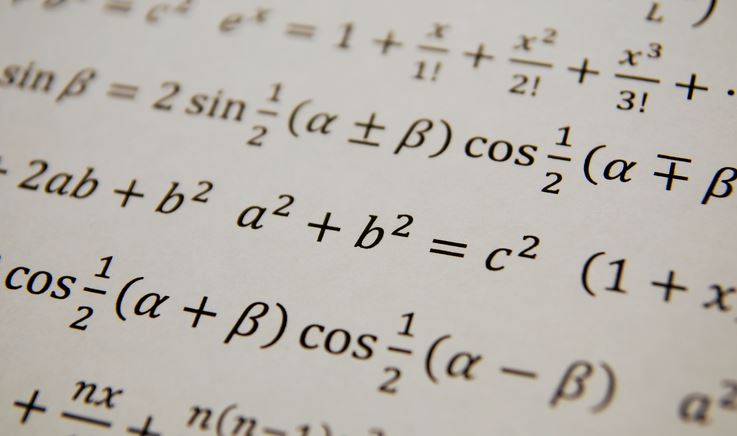
I can do math when I need to, but it was never my strongest subject in school. I liked my English, history, and music classes much more than mathematics. Who needs to actually know algebra in their daily adult life anyway? However, I’ll concede here that basic math is important to know and is actually a life skill. Also, electronic calculators are your friend!
Math takes on an entirely new level of difficulty when you’re tired, especially if you are running a marathon and trying to calculate something like your pace, or when you need to eat or drink, or how long it may take you to get to the 26.2-mile finish line. I call this, “The Mis-Calculus of Marathon Runners.” Please allow me to explain…
In a nutshell, you have several primary variables to consider:
Pace
Speed
Distance
Fuel (food)
Hydration (water, sports drink)
ET’s
Pace is calculated in terms of minutes per mile, for example, a 10-minute mile. In the simplest math possible, this means that you’ll finish the marathon in 4.4 hours (rounding up). BUT keeping a steady pace like this is next to impossible during the race and your pace will actually fluctuate wildly. Sometimes your pace will be faster than you expected, but my experience is that my pace is mostly slower…and slower…and slower…and now we walk.
Speed is calculated in miles-per-hour. Taking the 10-minute mile pace from above, your speed is going to be 6-miles per hour, or about twice as fast as the average walking speed, or infinity times faster than a couch potato.
Distance calculations are based on a couple of factors: miles completed, and miles to go, but a marathon runner is mostly concerned with miles to go. Oddly, the further you go in a marathon, the longer the miles get.
Fueling up and hydration are critical parts of the marathon runner’s calculus and although there are food and water stations along the route, you need to bring your own for backup. Typically, you are eating or drinking something about every 10-15 minutes depending upon what your fuel and hydration needs are in caloric terms. In a marathon, you are always in a calorie deficit, so you better stay on top of your food intake! Oh, and you may barf too, or worse…like crapping in your running shorts because you tried a new fuel on race day. Professional coaching tip on this: NOTHING NEW ON RACE DAY!
ET’s (or splits) are basically the time differences between a mile or a block of miles and will generally give you an idea of how you are sustaining, or progressing, or regressing which is generally the case for me being the rank amateur runner that I am. Rank is the keyword in that last sentence.
Secondary variables to consider are:
Sleep deprivation
Injuries (either before or during the race)
“The Wall”
Sleep deprivation – I hate you. In my personal experience, I never get a good night’s sleep the night before a marathon due to a phenomenon called pre-race anxiety. It happens. So, you are essentially going into an intense endurance race totally unrested. It sucks, and it can also turn into a huge negative mental challenge that can be difficult to overcome the further you get into the miles. You’ll start feeling loopy around mid-race and wonder if that dog you just passed really had two heads.
Injuries are relatively common with marathon runners, and it can be anything from a nagging sports injury to some other physical trauma that you had to recover from and endure, like tripping over a tree root while on a training run and injuring your shoulder or ankle or knee. At times like these, I remember the Japanese proverb “Nana korobi, ya oki” which translates to “Fall down seven times, stand up eight.”
“The Wall” is not a reference to the fantastic 1979 Pink Floyd album, rather, it is something that you “hit” at around mile 19. For some, the wall hits a little sooner, for others, the wall hits a little later, but hit it, you will. This is the point at which any lack of proper fuel and hydration intake will come to bite you hard. This is the place where the physical exhaustion and calorie deficit conspire to take you out of the race…if you let them. This is also the critical time to stop crying and collect yourself and rally for the last 7.2 miles, even if you have to do run/walk intervals. This is also where doing math is extremely difficult and it will never add up no matter how hard you try.
You might, might, be able to do some simple addition and subtraction to figure out your pace, or when you’ll finish your race, and you’ll do a lot of rounding up and down as you’re dragging your slow, tired ass toward the finish line, but multiplication and division take on entirely new dimensions of difficulty. Don’t. Even. Try. While in this state of mind, 26.2 minus 19 could be 5 or 6.6 or pi or the hypotenuse of an equilateral triangle or whether you need to find the next portable toilet. But then again, a runner’s watch will magically do all the math for you! I highly recommend one, but you will still find yourself second guessing what the watch is telling you.
At this point in the race, all you really need to concern yourself with is getting to the finish line and snagging that shiny finisher’s medal before the race officials start closing down the marathon course.
But that feeling of finishing a marathon – the runners high – makes all of this worthwhile, even when you think 2+2= less than 12 parsecs.



 msnarky