You see it every single day here in Los Angeles: People staring at their smartphones while they are supposedly working, or while walking down the street with their dog, or while driving their car (as they dangerously weave between the lane lines), or while at a Taylor Swift concert. These people are usually completely oblivious to anything that is happening around them, and so it is apparent that smartphones are great at blocking out situational awareness, perhaps by design. These people will be the first ones to go during a zombie apocalypse, and when you think about it, they are already in a semi-zombie state anyway, so it isn’t much of a stretch.
More often than not, these same people also have their Bluetooth earbuds crammed into their ear canals as tight as possible so that they can listen to music, or podcasts, or news, or Matt Foley: Motivational Speaker audio books. It is my opinion that they are intentionally tuning out the world and living inside their own personal bubbles. They never respond to you when you say “Hello” as you cross paths (making them seem rude, cold, and indifferent). They don’t hear you when you yell “Watch out!” as they blindly step onto the street while staring at the screen of their smartphone and walk directly into the oncoming path of a speeding city bus—ironically throwing themselves under the bus.
Then again, maybe it’s best to let Darwinism take its course and not interfere with the natural laws of the universe.
The headlines speak for themselves, “Man dies while taking selfie in front of a bison bull.” “Man dies falling off of parking structure while playing Pokémon GO!” “Woman dies in car crash while sexting her boyfriend.” The list goes on and on. Does this imply that smartphones are deadly? No: It only proves that there are too many dumb people walking around amongst us.
I don’t believe that smartphones have truly made people any smarter than they were before smartphones were invented, in fact, I’ll argue that the opposite is true because this has been my experience. It amazes me that even with the entire knowledge and history of the world at their fingertips—knowledge and history that previously required people to either go to a local library or ask their grandparents if they may thumb their way through their latest Encyclopedia Britannica edition—people still believe that Elvis is alive; that the earth is flat; and that the moon landing was a hoax. Indeed, cognitive dissonance is alive and well in the U.S.
I do believe that too much Internet bandwidth is consumed by the millions of pointless, viral cat and TikTok related videos du jour instead of by people seeking knowledge or facts, both of which appear to be in short supply these days. The last time I checked, knowledge and facts are still tariff free, so there is no additional cost to obtain them…and yet they languish. Half-truths, untruths, myths, rumors, and outright lies seem to rule the day.
Now that smartphones have AI capabilities, I think this is only going to accelerate the dumbing down of Americans. It’s going to be interesting to see how it progresses. I used to believe that AI in its absolute sense was isolated to city, county, state, and federal government politicians, you know, the smartest people in the room—just ask any one of them—and you can see how that turned out for us. If you believe that AI is somehow going to save us, you may only be half right because AI also has the potential to destroy us. I sense that AI will end up doing both in an endless creative destruction cycle. Buckle up, kids.
If there is a dystopian AI controlled Tyrellian evil robot future on the horizon, people won’t even look up from their smartphone screens long enough to notice. The masses will be led to their demise by means of a viral, cleverly gamified extermination program in which all of the “accidents” will seem plausible. May I suggest starting with the ones who have the most daily screen time as they pose the most danger to society? Come to think of it, this gives doomscrolling an entirely new meaning. Just kidding—obviously, it should start with the politicians.
There are few things in life that are more satisfying than a nice glass of cold water—especially when you are thirsty—but who decided that we should all be drinking an entire gallon of water a day and practically waterboarding ourselves on a regular basis? Was it the bottled water companies? The metal water container companies? The American Plastics Council? The urologists union?
When I was growing up in the San Fernando Valley, the only water I drank was from the Los Angeles Department of Water and Power (LADWP) city water supply that came directly out of my tap…or sometimes I drank it from a garden hose if I was desperate and close to dying from dehydration. I didn’t mind the sun warmed water with the funky black rubber taste coming out of the hose. I only drank water when I was thirsty and stopped drinking it when I was satiated. Seemed like a natural thing to me.
I also drank water out of those colored see-through plastic acrylic cups, pastel colored aluminum cups, and those weird, funny smelling primary colored Tupperware cups. I’m sure that I consumed some toxic materials and microplastics along with the water, but in my defense, there weren’t any California Proposition 65 warning labels at that time. Yes, I’m a survivor.
Back then, there simply wasn’t a daily water volume standard: You drank water when you were thirsty and that was about the only reason to do it. For me, maybe it was about a pint or so, unless I was doing some physical activity—like skateboarding—which would maybe double that amount. If I had some spare change, I could also buy a 16-oz Coke (which is mostly water anyway) at Bamford Liquor store on the corner of Magnolia and Cahuenga boulevards for 15 cents. All in, it was maybe a maximum of 1.5 quarts of daily liquid intake, nowhere near the 1 gallon per day (GPD) volume as “recommended.”
This new GPD standard has given rise to the following:
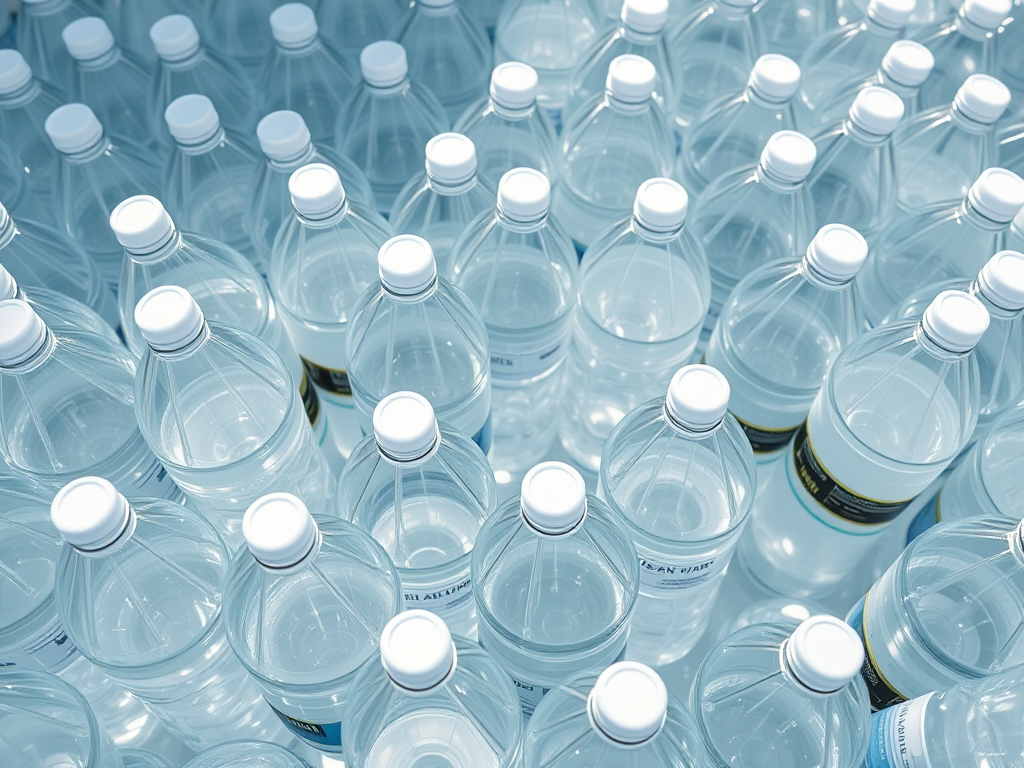
Mass consumption of bottled water in clear disposable plastic containers that make it impossible to differentiate whether or not your coworker is drinking water or day-drinking vodka at their desk.
Expensive designer water; Perrier; San Pellegrino; VOSS, etc. I’m not sure why people are willing to pay 1,000x the cost of tap water, but they do.
Portable metal tankards of all sizes, often used for lifestyle and political statement stickers. I read that people are now getting tendinitis from carrying around their ridiculously large one-gallon jugs. It has also been reported that several small dogs met their demise when their owners dropped said jug due to finger fatigue.
Urinating 10x the normal frequency. This, my friends, is going to wear out your bladder. This may also give your friends and coworkers the impression that you have a bladder infection or a prostate problem.
Depletion of the public water supply from all of the excessive drinking and flushing. Indeed, we are simultaneously drying out the planet and pissing our lives away.
Furthermore, nothing looks sillier than an adult puckering up to drink from their disgusting encrusted straw with god only knows what kind of bacteria living on it, especiallymen. Also, you probably aren’t going to die from dehydration during your commute or when going to the supermarket for groceries, so it is completely unnecessary to bring your dumbass super-sized drinking vessel with you.
Were people ever regularly drinking a GPD of water? No! The closest thing to it that I could find was from way back in 1945 when the U.S. Food and Nutrition Board of the National Academy of Sciences recommended eight 8-ounce glasses of water per day—that’s all. This adds up to a total of 64-ounces, which is only a half-gallon. Apparently, someone in a corporate boardroom somewhere decided to round this up to a gallon to perhaps sell more bottled water and portable water container products. I stand by my list of suspects noted at the beginning.
You might think that municipal water is unhealthy, however, many bottled water companies use municipal water as their source and simply run it through a series of process treatments like pre-filtration, Reverse Osmosis (RO), Ozonation, UV lighting, post-filtration, and mineral additions, and now it can be sold as “purified” water. We already know that highly processed foods are bad for you, but what about this highly processed water? Just asking questions.
Sourcing municipal water is super cheap too. For this exercise I’ll use the common measurement of one acre foot of water, which is 325,851 gallons. One acre foot of municipal water costs an average of about $1,000, which is only (rounding up) about .004 cents per gallon. Super cheap was an understatement: It’s practically free!
Packaging this newly processed gallon (3.78541 liters) of purified water (which I’ll round down to seven half-liter units) in 500ml plastic bottles is going to cost about 2.6 cents each, including labels, for a grand total of 18.2 cents to package a gallon of water into seven 500ml plastic bottles give or take a half penny. This is how the bottled water companies sell bottled water for massive profits. This is also how we are getting totally ripped off when we pay 39 cents for a 500ml bottle of water at the corner mini mart.
Clean, safe municipal water is a relatively new thing too. It used to be that drinking local water was genuinely dangerous and could make you incredibly sick or kill you, so people used to drink a lot more beer, wine, and spirits because they were simply safer to drink. By all appearances, people back then must have been under the influence of some level of alcohol consumption day and night (and may have been a happier lot), however, I don’t think it was ever recommended by anyone to drink a gallon of any of these alcoholic beverages a day but knowing human nature and a little bit of history, some certainly did. This also suggests that the great thinkers and artists and writers did their best work while under the influence.
There is absolutely nothing like celebrating the 4th of July at the beach. Standing there at the edge of the land, with nothing but the expansive, reflective ocean in front of you, fireworks take on an entirely different dimension of beauty.
Ironically, here in Southern California where fireworks are practically outlawed, the acquisition and ignition of illegal fireworks goes on virtually unabated and are generally flaunted in the faces of law enforcement and firefighting personnel. This is not hard to imagine being that Mexico, with its year-round, inexpensive fireworks available nearly everywhere south of the border, is so close to Los Angeles.
One of my most memorable 4th of July celebrations was at Topanga State Beach in 1976 for the bicentennial. Back then there were no designated campsites, and you were allowed to pitch a tent directly on the sand and camp, which we did along with hundreds of other people with their tents which were scattered around the beach but in relatively close proximity. It looked exactly like a modern-day homeless encampment.
I was a 15-year-old punk-ass white boy juvenile delinquent, and my friend Jerry had taught me how to make really good firecrackers – the recipe of which I will not reveal as it may run me afoul of the law – but I made about a hundred of them because, why not. These were on par with the Mexican M-80s but were also waterproofed with beeswax. I would light one and throw it into the ocean and it would still explode underwater – like little depth charges. Although the fuses were cut to the same length, they were a little bit unpredictable with their burn time and sometimes the firecracker would explode before hitting the water or sometimes in midair. It’s not lost on me that I’m lucky that I still have all of my digits…and both hands…and my face.
Down the beach about fifty feet away from us toward the water, a couple of guys dug a pit in the sand – about eight-feet in diameter and a few feet deep – and lined it with rocks from nearby Topanga Creek and then started an impressive bonfire before dusk. When the coals were hot enough, they tossed in a 5-gallon bucket of magnesium shavings from their machine shop, and a few bright, errant sparks went aloft as the magnesium shavings began to heat up. In the meantime, fireworks and firecrackers were going off all up and down the beach; Roman candles; large and small bottle rockets; Buzzbombs (not the beverage); and loud, ear-piercing M-80 and M-100 explosions could be heard every half-second. It was pure mayhem. Happy 200th Birthday, ‘Merica!
Then one of the bonfire guys walked down to the edge of the water and filled his bucket with saltwater and then came back up to the bonfire, paused for a moment, and then started pouring the water directly into the pit. The result of the saltwater hitting the hot magnesium shavings was more than magnificent: It was ephemeral art. The fleeting, white hot fireball and radiating heat were impressive. The gathering crowd of people were oohing and aahing and clapping as the guys threw even more magnesium strips and water into the pit to keep their little show going.
Then there’s always that one guy in a crowd that will one-up anyone no matter the circumstances.
Two tents to our right, another guy, who was standing on the beach and smoking a joint in the glowing magnesium firelight, went into his tent and pulled out a shovel and a black six-foot long by six-inch wide pipe that had handles mounted on the sides. He dug a hole about three feet deep and put one end of the pipe in the hole and then back-filled the sand around the pipe to hold it in place. He tapped on the side of pipe and pointed the open end of it ever so slightly seaward. Then, again, from inside his tent, he pulled out what appeared to be a black bomb with a long fuse in it – like what you’d see in a Spy vs. Spy cartoon in Mad Magazine.
He lit the fuse with his joint, dropped the “bomb” into the tube fuse first, and took a couple of steps back. There was a slightly muffled PHOOM! and it launched that bomb looking thing high into the night sky like it was an artillery shell. Then there was a much louder BOOM! from above and a professional pyrotechnic level burst of red stars went off over the water. This prompted the crowd to cheer and applaud. People pulled their cars over and stopped on Pacific Coast Highway behind us to watch. Then he lit another one. And then another. It went on for about 15-minutes, the duration of which all of the other fireworks up and down the beach had ceased. It was spectacular.
After that impromptu semi-professional fireworks show, all of the other fireworks seemed puny, silly, and totally insignificant. We sadly carried on anyway.
We found out afterward that the guy worked in the pyrotechnics department at a very famous Southern California amusement park located in Anaheim. By all considerations, it was a pro level show, and the crowd loved it.
Then the waves from the incoming tide came up the sand and started flooding the magnesium fire pit, turning it into a hellish fireball which glowed under the surface of the water. Everyone began to scramble, and people were pulling up their tents and grabbing their camping gear and hauling them up to higher ground. It was complete chaos. I managed to save Jerry’s Coleman cooler full of Bud tall boys before it drifted out to sea. With the combined smells of marijuana, hot dogs, sulfur, and burnt arm hairs wafting through the air, we cracked open a couple of beers and gulped them down. They tasted like freedom.
This is an AI generated image that looks remarkably like the Lifeguard Queen of my youth.
Story 42 of 52
By M. Snarky
Late summer, 1974, North Hollywood, Calif. The walk from our apartment at 5342 Cahuenga Blvd to the North Hollywood Pool was about a mile, and for 25¢ you could swim all day. With only our towels in hand and one quarter each in our pockets (Grandma Opal Hess would say, “two-bits”), we walked directly west down the dry and dusty Union Pacific Railroad tracks that paralleled Chandler Blvd to North Hollywood Park, and then turn left at Tujunga Ave where the pool was located on the west side of the street just beyond the public parking lot. When the temperature rose above 100-degrees, it was like walking through the sweltering heat of a desert, but it was always worthwhile because I knew she would be there.
I had just turned 13, my younger brother Scott was 11-1/2, and our younger cousin Chris was 10-1/2. The three of us were accidentally representing the poor white boys of North Hollywood with our holey T-shirts, cut-off jeans, knee-high tube socks with holes in the heels and the toes and our worn out Keds and Converse sneakers. We had no food, no water, no sunscreen, and usually no extra money – not even a nickel for some bubble gum. Our parents were so broke that we would often have to resort to scouring the neighborhood for returnable soda bottles to collect enough money for the pool entry fee.
Whenever we did have any extra change, we would stop by the Winchell’s Donut House near the corner of Lankershim Blvd and Chandler because it was on the way to the pool, and we would have been foolish not to pick up a few 5¢ donuts.
At the front counter of the pool house, you handed over your hard-earned quarter to the attendant for a ticket, then you took the ticket over to the men’s side of the pool house where there was another counter. There was a hand painted sign above that counter that said, “No Cut-Off Jeans!” and, “No Swimming in Underwear!” and “No Urinating in the Pool!” There was another hand painted sign above the door that exited to the pool deck that said, “Rinse Off Before Entering Pool.” Being the ignorant youth that I was, I would have argued that the no cut-off jean policy was dumb and that the no swimming in underwear and no urinating in the pool rules were obvious, but why do I need to rinse off? But rules are rules, and in a public space they must be posted…and obeyed, that is, if you want to avoid getting kicked out.
There was this persistent rumor going around that there was a chemical in the pool water that turned bright red if you peed in it, which signals to everyone in the water around you AND the lifeguard staff that, a) you are a rule breaking savage, and b) you will be promptly removed from the pool, Pissboy will be tattooed onto your forehead, and you will be escorted off of the premises by two burly lifeguards, and banned for life from entering any of the Los Angeles County Parks & Recreation managed public pools. I will tell you unequivocally (although not without some level of embarrassment) that this was indeed just a persistent rumor that I believe was likely propagated by the lifeguard union.
Anyway, you gave the male attendant your ticket and they would hand you a mesh bag with what I can only describe as a large diaper pin that had a number stamped on the end of it which matched the stamped metal number tag attached to the bag. The first time we went to the pool I had no idea what I was supposed to do with the mesh bag or with the pin. After observing what the other men and boys did with them, I quickly figured out what to do, so I put my beat-up shoes, tube socks, T-shirt, and cut-off jeans in the bag, attached the pin to my swim shorts, and handed the bag over to the young man behind the counter who promptly hung the bag on a rack in numerical order.
Scott, Chris, and I, after rinsing off in the remarkably cold water (why was there never a hot water valve?), walked out onto the pool deck like we owned the place. Around the entire pool deck, about every ten feet or so, painted in fire engine red, was “NO RUNNING!” in huge, stenciled letters. More rules. So, with our towels draped around our necks, we briskly walked over to our favorite spot on the deck near the far southeast corner of the deep end where I could observe the high lifeguard chair from afar, which was the throne upon which my Lifeguard Queen sat.
She was a tan, brunette beauty with hazel eyes, wearing Ray Ban Aviator sunglasses, a white sun visor, and the iconic red one-piece Los Angeles County Lifeguard issued bathing suit. Being an official lifeguard, she also had the shiny metal whistle on a lanyard around her neck and a large megaphone by her side. She was a magnificent, powerful sight to behold, and I was crushing hard.
Mind you, I was not creeping on her or staring or ogling – I would simply glance over at her every now and then, hoping that one day she would notice me and smile and maybe wave at me. I had no idea what I was going to do if she ever did acknowledge me like that, but I probably would have suffered a heart attack.
I was comfortable in the water and thought that I knew how to swim, but I truly didn’t know how to swim well. You could say that I only knew how not to drown, just like most other recreational swimmers, I suppose. It wasn’t until I took professional swimming lessons decades later at Los Angeles Valley College for Ironman training with my wife Kim, that I realized how bad I was at swimming. How bad? It went something like this: On the first day of training, coach Stuart directed us (about three-dozen people) to self-seed ourselves along the pool coping thusly, “Advanced swimmers in the right-hand lanes, intermediate swimmers in the middle lanes, and beginning swimmers in the left-hand lanes.” I considered myself an intermediate swimmer and lined up in the middle lane.
Then coach Stuart said, “Okay swimmers, we’re going to split lanes for this drill in a clockwise direction, so we don’t swim into each other. Tom, Frank, Lisa, and Caroline will demonstrate this for you.” The four of them jumped into the middle lane and with a “Yip!” command from the coach, they started swimming in single file along the left-side next to the pool lane divider and when they got to the far end of the lane they turned around and came back along the right-side pool lane divider, passing each other without crashing as they swam in opposite directions.
Coach Stuart continued, “Does everyone understand this?” and we all nodded our heads in acknowledgement. “Now I want everyone to swim a few laps to warm up – Yip!” And with that, we jumped into the water and began swimming as directed. When I got back to the coaches side of the pool after a couple of laps, coach Stuart signaled me to the coping and asked me my name. “Okay, Kent, move down a lane to the left.” I moved down as directed. After a couple more laps, coach Stuart signaled me again and said, “Brad, move down another lane to the left.” I complied. By the time the warmup was over, my name was Norman, and I was standing in the wading pool.
But back in 1974 at North Hollywood Pool, I felt like I was channeling Olympic Gold Medalist Mark Spitz, and I was positive that I caught the queen’s eye once or twice as I swam by her elevated throne.
On the opposite side of the pool from the lifeguard chair were the two glorious springboards – one set at 1-meter, and the other set at 2-meters. These were our favorite activity to do at the pool. We got pretty good at doing jackknifes and swan dives (or so we thought), but big fat cannonball and cherry bomb splashes were our favorites. We mostly just goofed around doing boyish things like belly flops, lazy forward flips, mostly out-of-control back flips, and “Change-your-minds” where you acted like you were going to dive straight into the water but tucked into a cannonball at the last second.
On the last August day of the summer pool season – which was coincidentally also an extremely hot day – a Speedo wearing whale of a man swam right into the diving lane impact zone as I launched myself off of the springboard. I was in midair when I heard the whistle blow, but I didn’t see him until it was too late because I was looking across the pool to the Lifeguard Queen of all my dreams who was blowing said whistle. I collided with him upon entry of my almost perfect starfish belly flop, the impact of which knocked the wind out of me. I involuntarily inhaled a lungful of water which burned my lungs like fire. I began gasping uncontrollably for air under the surface of the water as I started sinking. The last thing I remembered was hearing a muffled splash next to me as I was looking up at the blazing, shimmering sun through the rippled surface of the water.
When I came back to my senses, there she was, smelling like Coppertone coconut tanning oil, leaning over me with the bleach scented chlorinated pool water dripping off of her face and hair and red swimsuit, giving me mouth-to-mouth resuscitation on the warm concrete pool deck. Her lips tasted like cherry flavored ChapStick. She was even more beautiful close up. Was I in heaven? I looked into her stunning hazel eyes and smiled. She pulled back and asked, “Kent, are you okay?” She knew my name! THE LIFEGUARD QUEEN KNEW MY NAME! Wait! How did she know my name? What happened? Never mind – let it happen! I started to say, “I love you, Lifeguard Queen!” but before I could say anything, I was rudely awakened by a big splash of pool water. Alas, it was all just a very vivid dream, probably intensified by the heat, hunger, and dehydration. But it seemed so real.
On the way out through the pool house that day she was working the front counter. We made eye contact, and I bashfully looked away. She said, “Cool Tee-shirt!” I was wearing a classic white Coca-Cola Tee-shirt with the red arm and neck ringer bands. I blushed. Then she said, “Have a nice day – see you next summer.” My heart skipped a beat. In an awkward, broken voice, I barely got, “See you next summer,” out of my mouth. At that age, “next summer” always seemed such a long way off and it would never come soon enough.
Summer, 1975, North Hollywood, Calif. This year we had secondhand BMX bicycles that we pieced together to get to the pool faster! On opening day, we raced each other down the railroad tracks from the apartment to the pool. All along the way we kept trying to one-up each other to see who could bunny-hop the highest or ride a wheelie the longest – this turned into a serious competition! Breathless, we locked our bikes to the rack at the pool and rushed to the front counter to get our tickets. The three of us; Scott, Chris, and myself, breathing heavily and dripping with sweat, didn’t even register with the attendant who just smiled at us as he took our quarters and handed us our tickets.
The singular thing that was occupying my mind was the Lifeguard Queen.
This time, the cold shower before entering the pool area was appreciated after riding our bikes so hard in the summer heat. We speed-walked toward our regular corner when we heard “Slow down!” coming over the staticky public address system, clearly directed at the three of us. We complied and slowed down – barely. As we briskly walked behind the queens throne I glanced up to get a brief look of her highness without being too obvious, but this time, the occupant of the throne was not the queen, instead, there was an imposter in her place: the throne was being occupied by one of the male lifeguards. Noooo! Where in the world was my Lifeguard Queen? Wahhhh! Sadly, I never saw her again. The pool days were never the same afterward. I felt an emptiness in her absence and became less enthusiastic about going to the pool.
Although I didn’t learn what her real name was, I imagined that it was something regal like Elizabeth, Genevieve, Catherine, or Margaret.
The summertime always reminds me of those carefree days at that pool with my brother and cousin, but mostly, I wonder about the Lifeguard Queen.
For the last three months I have been working the overnight shift on a retail store network equipment refresh project for a global shoe brand. Due to contractual obligations, I am not at liberty to disclose the company name, but what I can say is that they’re kind of a big deal and I’m grateful for being part of this project.
However, working the night shift is hard for us humans. It throws our circadian rhythm so far out of whack that what once was perhaps a pleasant samba groove in 4/4 time becomes an offbeat primal sound more like that of a chimpanzee on meth beating on a metal trash can with a crowbar.
Getting out of the familiar 8 AM to 6 PM daytime rat race schedule and into the 6 PM to 4 AM nocturnal racoon schedule – the wee hours of which, incidentally, are the same as those of the tweakers, serial killers, zombies, vampires, and aging rock stars – is certainly not for everyone. I don’t love it, but it is necessary and mercifully temporary.
Your instincts are that when it gets dark outside, you are supposed to be winding down, not up. By 2:00 AM, you find yourself in an epic mental battle between your mind desperately wanting to sleep and your mind needing to stay wide awake and mentally sharp. You oscillate between these wildly opposite mental states. It’s not easy. It’s an eternal battle between Greek gods Hypnos and Argus Panoptes.
But you find ways to stay awake, like reading a book, listening to upbeat music, or playing a newly discovered online version of Whist, a popular 19th century card game that Dostoevsky mentions in The Brothers Karamazov that I had to Google when I read it. Whist was a predecessor of modern Contract Bridge, which is my dad and stepmom’s favorite card game. Sometimes I find myself doing all of these at once.
I feel oddly guilty about pouring a dram of whiskey at 4:00-AM and getting up at the crack of noon. It feels strange going to sleep for 8-hours and waking up on the same day. And even though I do typically sleep for 8-hours, I still feel tired. But why though? I mean, it’s just a time shift, right? I should feel totally normal, right? Well, not exactly…
In 1972, geologist Michel Siffre, one of the early pioneers of experiments on human circadian rhythms, spent six months in Midnight Cave in southern Texas. Siffre suffered both acute and lasting effects, only partially recovering from the isolation physically, mentally, and emotionally. His internal clock shifted to 48-hours, and he completely lost track of hours, days, weeks, and months. He stayed awake for 36-hours straight and slept for 12-hours at a stretch. His Day 63 inside Midnight Cave was really Day 77 above ground.
Siffre later described the experience as: “A slow slide into madness.” He talked to insects for company. He found comfort in his own voice, but silence always returned, crushing and relentless. After 180 days, Siffre’s team removed him from the cave. To him, only 151 days had passed. 29 days were unaccounted for in his daily diary. Time literally slowed down, stretched out, and slipped away from him.
So, from Siffre’s experiments we can conclude that our circadian rhythm is nothing to trifle with or you just might risk losing your mind a little bit. Duly noted. It’s still May, right?
I have one more week to go. I hope I make it. But if you see me talking to insects, you’ll understand why.




 msnarky