Story 15 of 52
By M. Snarky
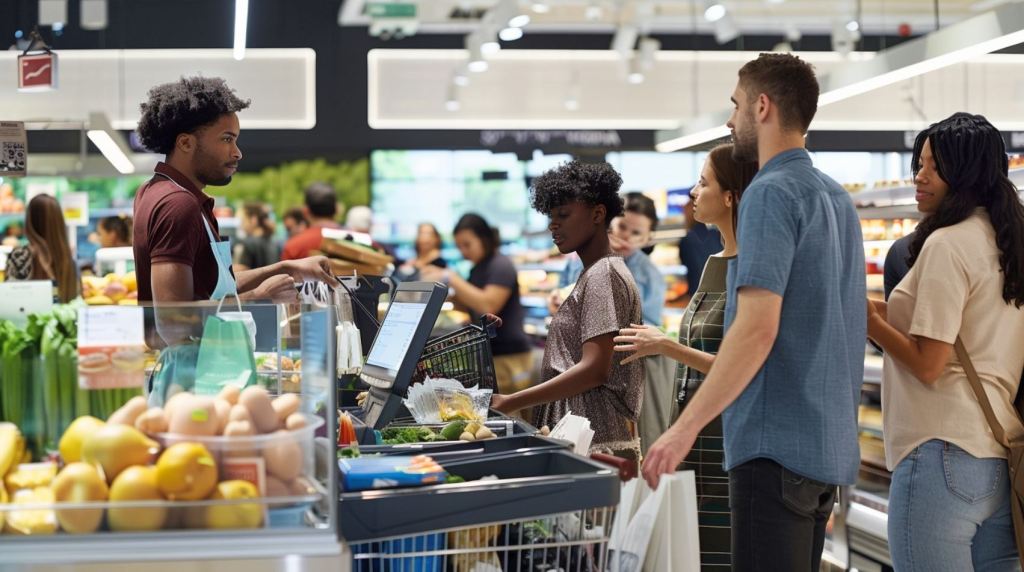
American supermarkets are true wonders of choice and convenience. You can practically find everything you need at almost any time that you want it. You can also tell a lot about people by observing what they put on the conveyor belt in the checkout line.
I love to cook, and my shopping list is built exclusively around the menu for the week. My product choices are almost never driven by coupons or discounts – they are largely driven by what I want to cook and eat in the upcoming week. Admittedly, I’m a very pragmatic shopper and don’t diverge much from my list. However, if I see that tri-tip is on sale as I’m cruising through the meat department, I’ll grab one and save it for a future meal. Pragmatic, not foolish.
My shopping basket of groceries is practically all-telling with the protein, produce, baked goods, canned items, and condiment choices. I also like a wide variety of foods and cuisines, so my list is never static or based on a standard meal like meatloaf every Thursday night. I don’t even subscribe to the Taco Tuesday craze.
I can also always tell who the personal grocery shoppers, are, i.e., the Instacart and Uber Eats types. They are always in a rush and often have two or three shopping carts in tow clogging up the aisles while scrolling down their shopping lists on their phones. Can you really trust these people to buy produce for you? Like, do they really know how to pick out a ripe watermelon?
The produce department is also an interesting place to watch people. I have personally seen a person squeeze every single lime in the bin and pick out only the ones that apparently have the most juice potential. There are also the ones that grab a handful of string beans and eat them while they shop; grazing while shopping (GWS?), if you will. This is why it’s imperative to wash your produce before eating it.
While waiting in the checkout line, I look at what the shoppers in front of me are putting on the conveyor and play a game where I try to guess what they are cooking, essentially, foretelling their menu. I’m probably mostly wrong, but sometimes I do get some inspiration.
But some shopping carts make me scratch my head. For example, the ones with cases of soda pop, a dozen frozen pizzas, ten cans of canned stew, a liter sized yellow mustard container, and the largest bags possible of potato chips or cheese doodles. Maybe these are the coupon only driven shoppers.
I can ascertain a couple of things from this:
- This person absolutely does not cook at home.
- If this is what this person consumes on a regular basis, they are not going to live very long.
- They are likely diabetic.
And sometimes there’s the female 3-item shopper buying a box of white wine, a frozen Lean Cuisine dinner, and cat food.
There’s also the male counterpart buying a six-pack of beer, a Hungry Man dinner, and dog food.
It’s not hard to guess that they are probably single. I think the supermarkets should use AI to identify shoppers like these in their expansive database and maybe play matchmaker.
There are also the single-minded shoppers purchasing a bottle of tequila, a bottle of orange liqueur, a bottle of agave syrup, and a dozen limes. Margarita, anyone?
Self-checkout is generally limited to 15-items, but people regularly exceed this limit and slow down the entire quick checkout process. The other night I witnessed a woman with two full shopping carts using the self-checkout. These are also the people that often cut in line. They should be banned.
The most interesting and sometimes comical interactions happen between the shopper and the cashier, and the shopper and the payment terminal.
I have seen people with what could be considered a purpose-built coupon wallet pulling out dozens of coupons. Sometimes a coupon is rejected for one reason or another which always prompts some often-intense verbal interaction between the shopper and the cashier. I have seen these people remove items from their purchase because the coupon expired, or it was the incorrect size per the coupon restrictions. I think these are also the people who never pay full price for anything – no ifs, ands, or buts.
Then there are the people paying cash, sometimes with fistfuls of coins. This coin counting takes way too much time and should be outlawed.
An honorable mention goes to the old-timey check writers. Albeit writing anything in cursive these days is becoming a lost art, writing out a check takes way too much time:
- Date (after asking the cashier what the date is): 10-seconds.
- Pay to the Order of: 5-seconds.
- Entering the dollar and cent amount in the $ window: 5-seconds.
- Writing out One hundred twenty seven & 32/100: 15-seconds.
- Signature: from 2 to 10 seconds depending upon the number of syllables.
So, 10+5+5+15+5=40-seconds in total, the time of which you’ll never get back. It’s almost exclusively the old folks that do this.
How about using a debit or credit card instead? 5-seconds tops unless you fat-fingered the PIN code and have to re-enter it. The old folks almost never use these because they still don’t trust the system.
Writing checks is definitely a generational thing with the exception of someone intentionally “kiting” or “floating” a check which is to make use of non-existent funds in a checking or other bank account “until payday,” which is technically illegal. Others are “paper hangers,” that intentionally write bad or stolen checks. No matter how good the economy is, there are still lowlifes like this running around.
Anyway, this last Tuesday, someone had the following on the conveyor:
- Flank steak.
- Corn tortillas.
- Two white onions.
- Six Roma tomatoes.
- A half-dozen Jalapeño peppers.
- a half-dozen Serrano chilies.
- One head of garlic.
- One dozen tomatillos.
- One bunch of cilantro.
- One 12-pack of bottled Modelo beer.
I’m guessing carne asada tacos with salsa verde and pico de gallo and cold beer on a Taco Tuesday night. Hell yeah! Oh, wait – that was me!
Instagram: @m.snarky
©2024. All rights reserved.









 msnarky