By M. Snarky
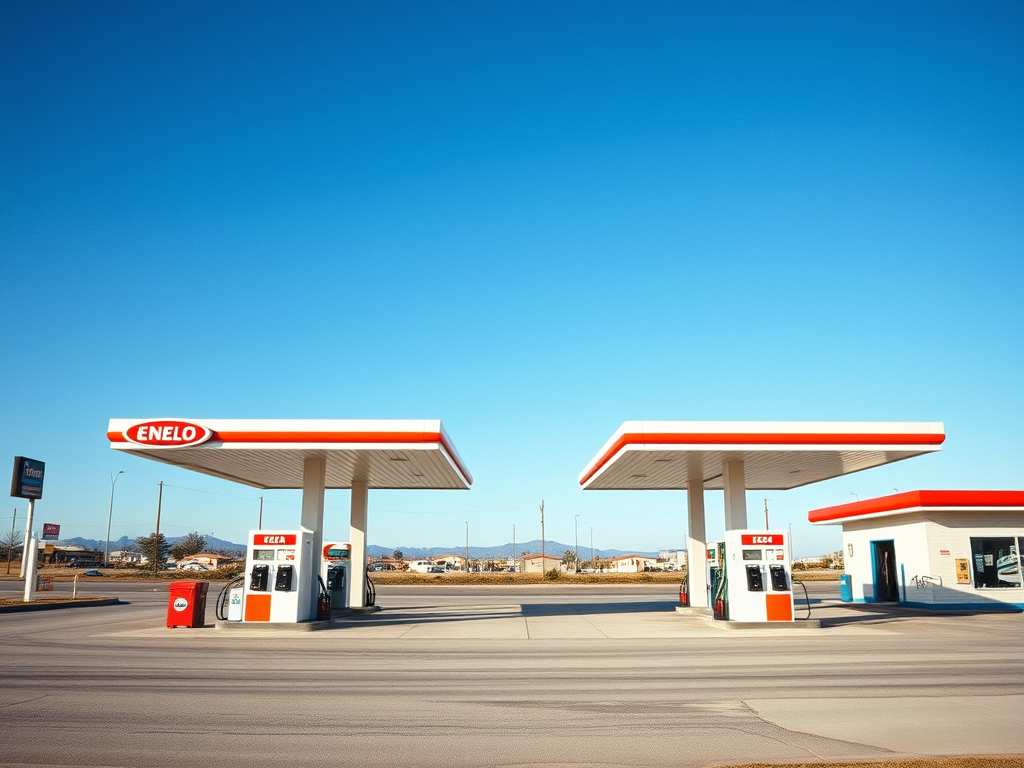
In 1979 I was basically a broke, skinny, long-haired, hot-headed, smart-ass 18-year-old punk between jobs. I was also earnestly looking for employment in the L.A. Times classifieds, but the economy wasn’t doing so great so there weren’t many jobs available. I eventually took a job at the Union 76 gas station at the northwest corner of Whitsett Avenue and Vanowen Street in North Hollywood, California, because, thankfully, my brother Scott was already working there as a mechanic, and he got me the job by word-of-mouth. The pay was $3.50 per hour. Don’t laugh. Granted it wasn’t much money, but at least it was above the minimum wage and enough to buy food and make rent.
I’ve managed to maintain some of that hot-headed smart-ass punk attitude, albeit nowadays is it mostly reserved for the people who deserve it; like the ones that drive like a-holes, and the ones that cut in line, and the ones that bring 20-items to the 10-item or less express checkout line at the grocery store.
I quickly found out that you meet some very interesting people at the corner gas station.
The gas station owner was a man named George Christie, a divorced, cranky, chain-smoking, coffee chugging, foul-mouthed WWII army captain who was only about 5-feet-8-inches tall. Scott was 6-2, and I was 6-feet even, and so Mr. Christie always had to look up to us when he talked to us. This seemed to perpetually piss him off and make him swear more than usual, meaning that every third word was an expletive instead of every fourth word. In one single sentence, George Christie would string together more expletives than the saltiest of Navy sailors could do in an entire year. George Christie made swearing an art form.
Mr. Christie’s primary job was a Southern Pacific Railroad (SPRR) locomotive engineer working the graveyard shift and the gas station was his little side hustle. I don’t believe the man ever slept for more than four hours at a stretch. Mr. Christie had a socially awkward teenage son (the name of whom I cannot recall), and his son had a governess with him at all times. She was a homely, chubby, middle-aged woman and it didn’t appear to us that the son had any special needs that required any, um, governing, however, Mr. Christie loved to brag about his sexual activities with the old, fat, ugly matron, which—to use the vernacular of the day—was grody to the max. I’ll spare the reader the sordid graphic details that Mr. Christie delighted in telling us.
By today’s standards that gas station was the epitome of an old school operation. Us “Gas Jockeys” wore matching navy-blue uniforms with the Union 76 logo on the right side of our chest and our name patch on the left side of our chest. No snacks or drinks or rolling hot dogs of questionable age and origin for sale; only gas, oil, a handful of basic car parts and basic car repairs and maintenance services. There was one self-service and one full-service island. Each island had two pumps with two hoses each—one pump was for regular gas and the other pump was for premium. Theoretically, we could be pumping gas for up to eight cars at once, but that never happened. There was a pneumatic black rubber tube that ran across all of the service driveways which rang a bell inside the two-car service bay when a car drove over the tube, alerting us that someone had pulled in. This is when would jump into action.
Most customers paid cash, and a small percentage of them used credit cards, including an exclusive Union 76 gas card with the distinctive orange ball logo. Generally speaking, the people with credit cards drove nice late model cars. I foolishly applied for one of these gas cards thinking I would have an advantage by being an employee of a Union 76 gas station, but it was declined due to insufficient credit history—my FICO score was stuck at 0.
We had to use these infernal manual imprint machines for the credit cards—the ones where you first insert the credit card into a slot at the top of the machine and then you place a blank, Union 76 branded pre-punched serial numbered three-layer carbon copy receipt sheet over the index pins on the left-hand side, lay the sheet over the credit card, and then slide the imprint roller over the entire assemblage from left to right, making a distinct shook-shook sound. This system did not work flawlessly. The machine would jam frequently and sometimes the imprint was off by quite a bit requiring a re-imprint. Mr. Christie was so frugal that he tracked the receipts and made us pay a dime for each one of them that were wasted. Definitely overpriced and probably illegal, but we didn’t know any better. There was no written company policy, or employee handbook, or HR department, or mid-level manager to file our grievances with: There was only Mr. Christie, and he was the self-appointed judge, jury, and executioner of his gas station fiefdom.
After imprinting, we would manually write down how many gallons were pumped, the price per gallon, and the total price that was displayed in the gas pump window onto the right-hand column of the receipt and then ask the customer to verify the total and then ask them to sign the receipt on the line, then we would tear off the top copy and hand it over to the customer. Next, we would tear off the middle carbon copy sheet and throw it away, and then ring up the total on the digital NCR cash register which would print out another receipt that we stapled to the imprint receipt, and then finally insert the bonded receipts into a slot in the front of the cash drawer. It was a spectacularly idiotic time-consuming tedious process, especially by today’s chipped credit card transaction standards, but at the time it was relatively state-of-the-art. Every now and then a nice lady would tip me a buck or two in cash before driving off which, speaking for myself here, would go unclaimed and directly into my pocket.
Cash was an entirely different animal. Mr. Christie would leave a cash drawer in the safe containing exactly $147.50 in the following denominations and quantities:
$20 x 3
$10 x 4
$5 x 4
$1 x 10
$10 – roll of quarters
$5 – roll of dimes
$2 – roll of nickels
.50¢ – roll of pennies
At the 9:00 PM closing hour, we would print out the cash register receipt total for the day, count the cash and write down the totals in an old oil-stained dog-eared ledger, and take the daily gallon readings off of the pumps and enter those numbers in their own separate columns. We would deduct the opening cash of $147.50 and do some basic mathematics using only plusses and minuses—no spreadsheets back then, just a very basic 10-key digital calculator…and you better have it right down to the penny or Mr. Christie would give you an earful of the most artfully contrived personal insults and expletives you ever heard in one breath, reinforcing his art form status seemingly without much effort. And yes, he would deduct any shortcomings from our paycheck because his default mindset was that we were all a bunch of thieves ripping him off at every opportunity which, except for me pocketing unclaimed tips, was totally untrue. Besides, I don’t believe that this would technically qualify as theft.
Other tasks to complete at closing time were locking up the water and air hoses in the metal bins at the end of the islands, disconnecting and rolling up the black rubber pneumatic hoses for the bell, locking the pumps, turning off the circuit breakers for the gas pumps and the signage, empty the blue tinted windshield washing fluid from their bins, and putting the cash in the safe. We got so good at our closing time routine that by 9:15 the gas station was a ghost town.
When dealing with cash there are scams that fall just outside of blatant robbery, for example, the Quick Change Scam, or what we called a Murphy. One day, a quick change artist came up to me to ask for change for the bus. As he was going through his rapid-fire iterations of his very polished change-this-for-that routine, I sensed that something just wasn’t adding up, so I quickly closed the cash drawer and asked him to show me the cash that he had in his hand. The bastard ran off at the speed of an Olympic sprinter. Fortunately, I only got Murphy’d for $10. The damage could have been far worse.
Mr. Christie was not impressed with what I thought was quick thinking, and fortunately he did not make me pay for the loss (which, by the way, was totally out of character for him), instead, he called his L.A.P.D detective friend and had me fill out a report over the phone with the following information:
Date: June 1, 1979
Time: Around 19:00
Location: 12505 Vanowen Street, North Hollywood, CA 91605
Phone Number: 606-0842
Alleged Crime: Theft.
Perpetrator Description: Caucasian, male, approximately 30-years old, 5-feet 9-inches tall, 140 pounds, long wavy black hair, brown eyes, black Chevron style mustache (like Burt Reynolds), blue bandana headband, white Led Zeppelin concert tee shirt, Levi’s 501 denim jeans, brown Dingo boots. I had inadvertently described at least 2-million men living in Los Angeles.
The next kind of thieves were the drive-offs. These lowlifes (who were always men, in case you were wondering) would pull into the full-serve island, flash some cash, and ask for a fill-up. In the 5-second window when we’d go to hang up the pump nozzle after filling their tank, they would quickly start their engine and drive off as fast as they could, often doing a burnout on the way out.
One time a guy t-boned a car on Whitsett boulevard as he recklessly sped out of the gas station driveway. The collision crushed his radiator and disabled his car. When the cops came for the accident, we told them what had happened, and the jerk was promptly arrested. Oh, and he had some weed in his possession too. Talk about instant karma. I hope he enjoyed his stay at the county jail.
Ironically, gas was only about $0.88 per gallon back then, and a fuel tank on a mid-sized 1970’s car was about 15-gallons. Even if the tank was bone-dry, a fill up would have only cost $13.20, which is not an amount of money worth going to jail for. Truthfully, I can’t think of any amount of money under a million bucks that is worth going to jail for. Clearly, the drive-off guys were just a bunch of dumbasses.
Fortunately, I never had a guy shove a gun in my face and rob me. Franky, it probably would not have turned out well for the robber with so many big tools and sharp things lying around a repair shop plus the readily available Louisville Slugger baseball bat hiding on the left side of the cash register stand that was always at our disposal, you know, just in case.
We had a greasy AM/FM transistor radio in the service bay area next to the cash register stand, and Scott and I would listen to local FM rock stations 95.5 KLOS, 94.7 KMET, or sometimes 106.7 KROQ, all of which Mr. Christie despised. “How can you fuckers listen to that shit!” was his typical reaction. He preferred Sinatra, “A real artist,” but Sinatra was not getting any air play in 1979. So, the moment Mr. Christie entered the gas station, he’d walk directly over to the radio and change the station to KNX 1070 AM. It was 24/7 news, weather, sports, and Bill Keene rattling off traffic reports and Sigalerts every 10-minutes or so. This was beyond boring for an 18-year-old. You bet your ass that the instant Mr. Christie left the gas station for the day, that radio was back to blasting rock ‘n’ roll. Indeed, there was an ongoing undeclared radio war between management and labor.
In practice, a gas station essentially operates as a retail business because you are selling goods like gasoline, quarts of oil, oil filters, v-belts, radiator caps, locking gas caps (there was an oil crisis going on and gas theft via siphoning was a thing), and windshield wiper blades, plus selling services like oil changes, tires, brake jobs, and tune-ups. This is where the real money was, and Mr. Christie encouraged us to upsell everything at any opportunity, but dishonesty was not allowed at any time. In other words, don’t take advantage of anyone.
We got very good at upselling at the full-serve island. It almost wasn’t fair because most of the full-serve customers were women who simply didn’t want to get their hands dirty. We would start by asking them if we could check the air pressure in their tires, and the answer was always, “Yes.” While checking the air pressure, we would note if any of the tires were unreasonably low which would indicate a slow leak. It was $20 to patch a hole in the tire. We would also check the tire tread for uneven wear or baldness and if any of them were in bad shape, we would sell one or two or sometimes four tires.
Then we would ask if they wanted us to check the oil, again, the answer was, “Yes.” If the oil was low, a quart would cost $1. If a v-belt was loose or starting to fray, we would suggest replacing it which would set them back $25. We would also check the air filter, radiator hoses, transmission fluid, brake fluid, and battery fluid levels, and windshield wiper blades, all of which were upsell opportunities. Scott and I were making a ton of money for the irascible captain who never really seemed to appreciate our efforts. We certainly didn’t benefit from it financially. The only benefit we got was that it broke up the monotony of a typical day of pumping gas at the corner station, which, to summarize went something like this:
Standing around.
Ding-ding!
Pumping gas.
Handling cash and credit card transactions.
Standing around smoking a cigarette.
Ding-ding!
Pumping gas.
Handling more cash and credit card transactions.
Standing around smoking cigarettes and talking about sports.
Ding-ding!
Pumping gas.
Handling more cash and credit card transactions.
Standing around smoking a cigarette and talking about the weekend.
Ding-ding!
Well, you get the idea—this was monotony defined.
We had the regulars too, and they came from every walk of life. There were a mix of blue-collar men and white-collar men. There were shy, pretty, young college aged girls, and flirty older married women. There were twitchy sketchy drug dealers selling everything from crank (which was an early form of meth) to cocaine to weed to prescription drugs. We had daytime drunks, families in station wagons, and run-of-the-mill surly jerks.
One day about a week before the 4th of July, a man pulled up in a massive land yacht (also known as an Oldsmobile Delta 88 Custom Cruiser station wagon). After filling his tank and paying for the gas, he asked me, “Would you be interested in buying some Mexican fireworks fresh from the border?” The resounding answer was “Yes!” He motioned with his hand to follow him, and he walked me to the back of the station wagon. He rolled down the tinted electric back window with his key, dropped the tailgate down, and pulled back an old thick canvas drop cloth with stains all over it to reveal the arsenal of illegal fireworks that lay beneath. My god, it was a glorious mix of fireworks of every description! Everything from firecrackers to M100s to Buzz Bombs to real Roman candles to small and large bottle rockets. My palms were sweating thinking about how I was going to celebrate Independence Day with a bang! I motioned Scott to come over and we both bought about $20 worth of fireworks each.
The downside to this was that while we were exuberantly celebrating the 4th of July in the middle of our street with our Mexican fireworks, we underestimated the major differences between the weak Red Devil Safe and Sane fireworks, and the powerful unsafe and insane Mexican fireworks. Perhaps it was the flaming Roman candle projectiles hurling over the rooftops that prompted someone to call the cops on us. Fortunately, our fireworks arsenal was depleted by the time the LAPD rolled up, so they got a big fat nothing burger for their enforcement efforts, but this did not prevent them from haranguing us.
On slow nights we would use some of the motor oil collected from the oil changes for the best smoky burnouts you can imagine, often engulfing the gas station in a thick cloud of white smoke. The residents in the apartment building did not appreciate this. We would also work on our older cars which were always in need of mechanical or cosmetic attention or an upgrade to the audio system.
I didn’t work at the gas station for long. By the fall, I was working at Floyd Floor Mats, in North Hollywood, CA for $3.75 per hour. A lowly .25¢ per hour more you might be thinking, but it was in fact a 7% raise. This job consisted of cutting out various floormat shapes from commercial grade carpet using templates and sewing on edges and silk-screening BMW, Mercedes-Benz, and Range Rover logos on them. I didn’t particularly love this job, and it lasted only a couple of months before I left for a better paying gig.
The old gas station is gone now, replaced with a shady looking used car lot that offers 100% financing. I’m sure the terms are fair. I wonder if the old burnout marks are still on the asphalt. I’m certain that Mr. Christie expired long before the turn of the 21st century.
In retrospect, Mr. Christie did teach me the importance of integrity and honesty. He also taught me how to use excessive expletives to communicate which doesn’t always go over well during PowerPoint presentations.
Instagram: @m.snarky
Blog: https://msnarky.com
©2025. All rights reserved.

 msnarky