Story 46 of 52
By M. Snarky
There are few things in life that are more satisfying than a nice glass of cold water—especially when you are thirsty—but who decided that we should all be drinking an entire gallon of water a day and practically waterboarding ourselves on a regular basis? Was it the bottled water companies? The metal water container companies? The American Plastics Council? The urologists union?
When I was growing up in the San Fernando Valley, the only water I drank was from the Los Angeles Department of Water and Power (LADWP) city water supply that came directly out of my tap…or sometimes I drank it from a garden hose if I was desperate and close to dying from dehydration. I didn’t mind the sun warmed water with the funky black rubber taste coming out of the hose. I only drank water when I was thirsty and stopped drinking it when I was satiated. Seemed like a natural thing to me.
I also drank water out of those colored see-through plastic acrylic cups, pastel colored aluminum cups, and those weird, funny smelling primary colored Tupperware cups. I’m sure that I consumed some toxic materials and microplastics along with the water, but in my defense, there weren’t any California Proposition 65 warning labels at that time. Yes, I’m a survivor.
Back then, there simply wasn’t a daily water volume standard: You drank water when you were thirsty and that was about the only reason to do it. For me, maybe it was about a pint or so, unless I was doing some physical activity—like skateboarding—which would maybe double that amount. If I had some spare change, I could also buy a 16-oz Coke (which is mostly water anyway) at Bamford Liquor store on the corner of Magnolia and Cahuenga boulevards for 15 cents. All in, it was maybe a maximum of 1.5 quarts of daily liquid intake, nowhere near the 1 gallon per day (GPD) volume as “recommended.”
This new GPD standard has given rise to the following:
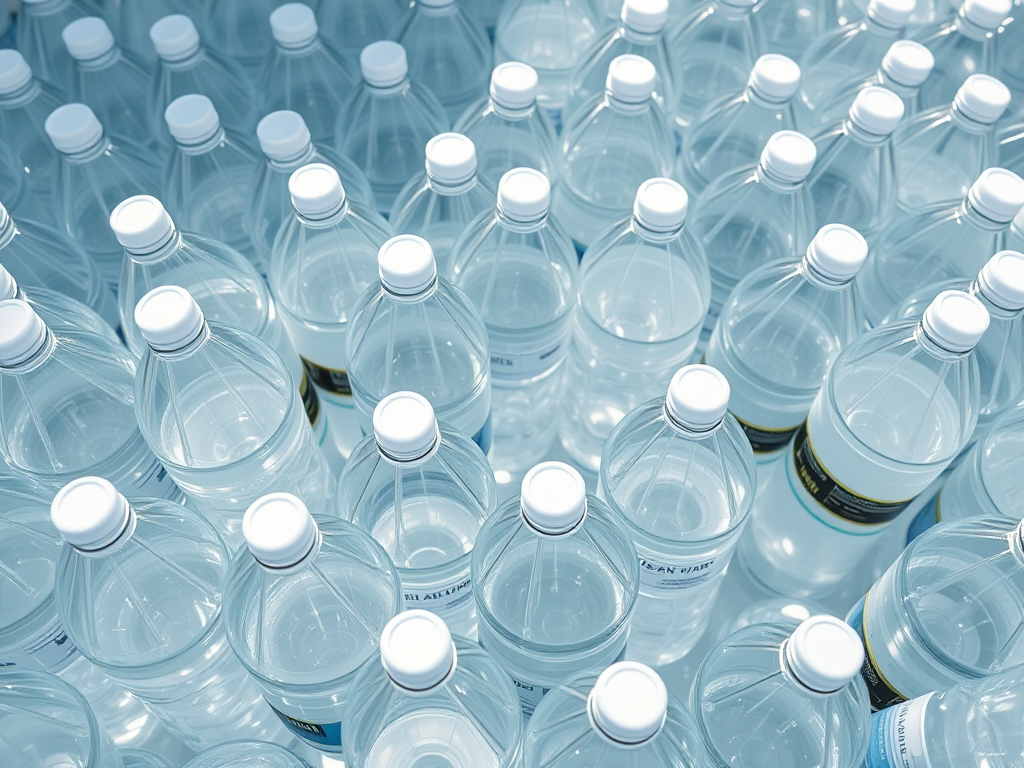
- Mass consumption of bottled water in clear disposable plastic containers that make it impossible to differentiate whether or not your coworker is drinking water or day-drinking vodka at their desk.
- Expensive designer water; Perrier; San Pellegrino; VOSS, etc. I’m not sure why people are willing to pay 1,000x the cost of tap water, but they do.
- Portable metal tankards of all sizes, often used for lifestyle and political statement stickers. I read that people are now getting tendinitis from carrying around their ridiculously large one-gallon jugs. It has also been reported that several small dogs met their demise when their owners dropped said jug due to finger fatigue.
- Urinating 10x the normal frequency. This, my friends, is going to wear out your bladder. This may also give your friends and coworkers the impression that you have a bladder infection or a prostate problem.
- Depletion of the public water supply from all of the excessive drinking and flushing. Indeed, we are simultaneously drying out the planet and pissing our lives away.
Furthermore, nothing looks sillier than an adult puckering up to drink from their disgusting encrusted straw with god only knows what kind of bacteria living on it, especially men. Also, you probably aren’t going to die from dehydration during your commute or when going to the supermarket for groceries, so it is completely unnecessary to bring your dumbass super-sized drinking vessel with you.
Were people ever regularly drinking a GPD of water? No! The closest thing to it that I could find was from way back in 1945 when the U.S. Food and Nutrition Board of the National Academy of Sciences recommended eight 8-ounce glasses of water per day—that’s all. This adds up to a total of 64-ounces, which is only a half-gallon. Apparently, someone in a corporate boardroom somewhere decided to round this up to a gallon to perhaps sell more bottled water and portable water container products. I stand by my list of suspects noted at the beginning.
You might think that municipal water is unhealthy, however, many bottled water companies use municipal water as their source and simply run it through a series of process treatments like pre-filtration, Reverse Osmosis (RO), Ozonation, UV lighting, post-filtration, and mineral additions, and now it can be sold as “purified” water. We already know that highly processed foods are bad for you, but what about this highly processed water? Just asking questions.
Sourcing municipal water is super cheap too. For this exercise I’ll use the common measurement of one acre foot of water, which is 325,851 gallons. One acre foot of municipal water costs an average of about $1,000, which is only (rounding up) about .004 cents per gallon. Super cheap was an understatement: It’s practically free!
Packaging this newly processed gallon (3.78541 liters) of purified water (which I’ll round down to seven half-liter units) in 500ml plastic bottles is going to cost about 2.6 cents each, including labels, for a grand total of 18.2 cents to package a gallon of water into seven 500ml plastic bottles give or take a half penny. This is how the bottled water companies sell bottled water for massive profits. This is also how we are getting totally ripped off when we pay 39 cents for a 500ml bottle of water at the corner mini mart.
Clean, safe municipal water is a relatively new thing too. It used to be that drinking local water was genuinely dangerous and could make you incredibly sick or kill you, so people used to drink a lot more beer, wine, and spirits because they were simply safer to drink. By all appearances, people back then must have been under the influence of some level of alcohol consumption day and night (and may have been a happier lot), however, I don’t think it was ever recommended by anyone to drink a gallon of any of these alcoholic beverages a day but knowing human nature and a little bit of history, some certainly did. This also suggests that the great thinkers and artists and writers did their best work while under the influence.
I’ll drink to that.

 msnarky